



Toyota Catalytic Converter Replacement Cost
A Realistic Guide To Replacing Your Old Catalytic Converter

Replacing a Toyota catalytic converter can be one of the most expensive exhaust system repairs you will face. Whether your converter has failed, been damaged, or been stolen, you may be surprised to learn that replacement costs can range from around $1,000 to more than $4,000, depending on the model.
The good news is that many Toyota owners don’t realize their original catalytic converter may still have value after replacement. In some cases, recovering value from the old converter can help offset a portion of the repair expense.
This guide explains:
- Average Toyota catalytic converter replacement costs
- Why are Toyota converters expensive?
- OEM vs. aftermarket replacement options
- Additional repair costs to expect
- How to potentially recover value from your old converter
Sell Your Toyota Converter Today
Average Toyota Catalytic Converter Replacement Cost
Toyota catalytic converter replacement costs vary based on the vehicle model, emissions requirements, labor rates, and whether OEM or aftermarket parts are used.
Below are some estimated replacement costs for popular Toyota models:
*Based on repair estimates. Actual costs may vary depending on vehicle year, location, labor rates, emissions requirements, and additional repairs.
| Toyota Model | Estimated Replacement Cost |
|---|---|
| RAV4 | $970-$1,064 |
| Tacoma | $1,273-$1,342 |
| Highlander | $1,809-$2,127 |
| Camry | $1,827-$2,165 |
| Sienna | $1,915-$2,090 |
| Corolla | $2,070-$2,130 |
| Prius | $2,346-$2,413 |
| 4Runner | $2,597-$2,654 |
| Tundra | $3,645-$3,692 |
Why Toyota Catalytic Converters Are So Expensive
One of the primary reasons Toyota catalytic converters are expensive is that they contain valuable precious metals used to reduce harmful emissions.
These metals may include:
- Platinum
- Palladium
- Rhodium
The market value of these metals can fluctuate significantly, directly affecting catalytic converter prices.
Additional factors that influence replacement costs include:
- OEM manufacturing standards
- Vehicle-specific emissions requirements
- Supply and demand for replacement parts
- Theft-related shortages
- Multiple converter configurations on certain models
OEM vs. Aftermarket Toyota Catalytic Converters
When replacing a Toyota catalytic converter, you’ll typically choose between an OEM converter and an aftermarket alternative.
OEM Catalytic Converters
OEM (Original Equipment Manufacturer) converters are designed specifically for your Toyota vehicle.
Benefits include:
- Factory fit and performance
- Easier emissions compliance
- Longer expected lifespan
The downside is that OEM converters are usually the most expensive option.
Aftermarket Catalytic Converters
Aftermarket converters are manufactured by third-party companies and generally cost less upfront.
Benefits include:
- Lower replacement cost
- Greater availability
- Budget-friendly alternative
Potential drawbacks may include:
- Shorter lifespan
- Lower precious metal content
- Emissions compliance limitations in certain states
The right choice depends on your vehicle, budget, location, and long-term ownership plans.
For more information on this, read on here: OEM vs Aftermarket Catalytic Converters
Additional Costs to Expect
The catalytic converter itself is often only part of the total repair bill.
Additional costs may include:
- Labor and installation
- Oxygen sensor replacement
- Repairs, welding, or fabrication work
- Theft-related damage repairs
Some Toyota models also have multiple catalytic converters, which can further increase replacement expenses.
How to Reduce or Offset Replacement Costs
Many Toyota owners focus entirely on the replacement bill and never ask what happens to the original catalytic converter.
You may not realize that the converter being removed may still contain valuable precious metals. Depending on the Toyota model, converter type, and current market conditions, recovering value from the original converter may help offset a portion of the repair cost.
Before replacement begins, consider asking your repair shop:
“I’d like my old catalytic converter returned to me after the repair.”
You may also want to ask:
- Will the converter automatically be recycled?
- Can I keep the removed converter?
- Are there any documentation requirements?
Many vehicle owners don’t learn this is an option until after the repair is complete.
Learn how to sell your Toyota catalytic converter with RRCats.
How Does It Work?
How Do I Ship?
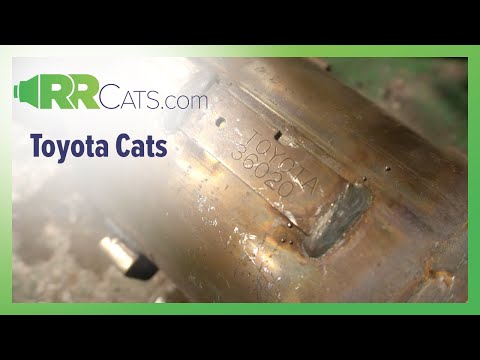
Identifying Toyota Catalytic Converters & Serial Numbers
Tom shows what a normal Toyota converter looks like and how to find the serial numbers needed for a quote. The Toyota serial numbers on the converters are easy to read and help our team correctly identify and quote them for you.
Identify Your Toyota Catalytic Converter Before Replacement
Correct identification is important when determining the type of catalytic converter installed on your Toyota.
Toyota catalytic converters often include:
- Stamped serial numbers
- Identification codes
- Model-specific converter layouts
Some Toyota vehicles may also have:
- Multiple catalytic converters
- Hybrid-specific converter systems
- Different converter configurations based on engine size
Identifying the converter correctly can help:
- Improve quote accuracy
- Confirm OEM vs aftermarket type
- Support resale evaluation
Use our Toyota Catalytic Converter Identification Guide to help identify your converter.
Legal Considerations When Selling a Toyota Catalytic Converter
Catalytic converter laws vary by state. Depending on where you live, proof of ownership, identification, or additional documentation may be required before a catalytic converter can legally be sold.
Some states also have restrictions related to:
- Who can sell catalytic converters
- Required paperwork
- Recordkeeping requirements
- Ownership verification
RRCats follows nationwide industry compliance procedures to help support legal and responsible catalytic converter recycling.
Nationwide Catalytic Converter Laws
See Whether Your Toyota Catalytic Converter May Still Have Value
If your Toyota catalytic converter is being replaced, don’t assume the original unit has no value.
Many OEM Toyota catalytic converters still contain valuable precious metals that may make them worth evaluating before they are recycled or discarded.
Before your repair shop disposes of the converter, learn about your options and determine whether recovering value from the original unit may help offset some of your replacement costs.
Get Quote By Email
- 📷 Photos of converter(s) (full unit & serial numbers)
- 📄 Proof of ownership (Registration, Title, or Bill of Sale)