

How Do Catalytic Converters Work?
Posted: January 20, 2026
Understanding how to scrap catalytic converters is one challenge—but understanding how catalytic converters actually work inside a vehicle is another. It can be surprising to learn that a relatively small steel component underneath your car contains valuable precious metals that play a critical role in reducing air pollution.
A catalytic converter is part of your vehicle’s exhaust system, and its primary job is to convert harmful engine emissions into less toxic gases before they are released into the atmosphere. Below is a clear, step-by-step explanation of how catalytic converters work, why they exist, and why they are so valuable when recycled.

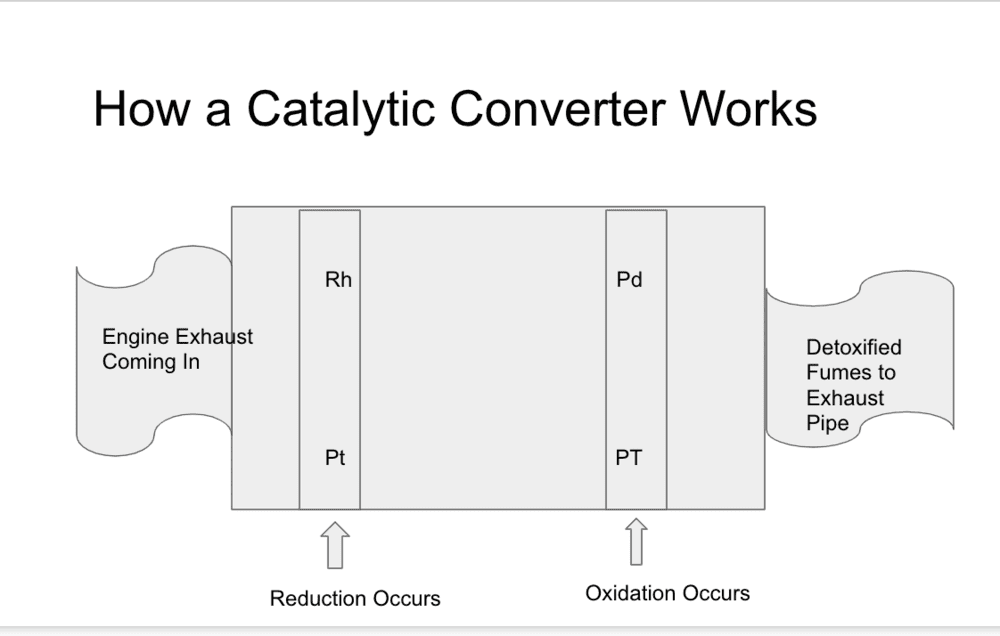
(Pic 1. Process Flow for engine exhaust through the Catalytic Converter)
Why Do Vehicles Have Catalytic Converters?
Catalytic converters became mandatory in the United States in 1975, following the implementation of the Clean Air Act and stricter emissions standards enforced by the Environmental Protection Agency (EPA).
Internal combustion engines produce harmful gases such as:
- Carbon monoxide (CO)
- Nitrogen oxides (NOx)
- Unburned hydrocarbons (HC)
Without a catalytic converter, these pollutants would be released directly into the air. The catalytic converter is designed to chemically alter these gases, significantly reducing a vehicle’s environmental impact.
Catalytic converters are typically located:
- Underneath the vehicle
- Between the engine and the muffler
- As close to the engine as possible to reach optimal operating temperature quickly
What Is Inside a Catalytic Converter?
Inside the steel shell of a catalytic converter is a ceramic or metallic honeycomb substrate. This honeycomb structure is coated with a washcoat that contains precious metals, including:
- Platinum (Pt)
- Palladium (Pd)
- Rhodium (Rh)
These metals are not consumed during operation. Instead, they act as catalysts, meaning they speed up chemical reactions without being permanently altered—hence the name catalytic converter.
Why Are Catalytic Converters Valuable for Recycling?
Catalytic converters are valuable because platinum, palladium, and rhodium are rare, globally traded precious metals used not only in automotive applications but also in electronics, chemical processing, and medical equipment.
Key reasons catalytic converters are recycled:
- Mining new precious metals is expensive and environmentally intensive
- Recovered metals can be refined and reused
- Recycling supports sustainability and emissions compliance
- Precious metal prices fluctuate, impacting converter value
At RRCats, converter values are determined by metal content, market pricing, and converter type, not just weight.
How Catalytic Converters Work: Step-by-Step
When exhaust gases leave the engine, they enter the catalytic converter at very high temperatures. Inside the converter is a ceramic or metallic honeycomb coated with precious metals that trigger chemical reactions.
- Reduction Phase: As exhaust first enters the converter, rhodium (Rh) and platinum (Pt) help break down nitrogen oxides (NOx) into nitrogen and oxygen, reducing smog-forming emissions.
- Oxidation Phase: As the gases move through the honeycomb, platinum (Pt) and palladium (Pd) convert carbon monoxide and unburned hydrocarbons into carbon dioxide and water vapor.
After these reactions occur, the treated exhaust exits the catalytic converter and continues through the exhaust system with significantly lower toxicity than when it entered.
Why This Matters for Scrappers and Recyclers
Understanding how catalytic converters work helps explain:
- Why different converters have different values
- Why some converters contain more precious metals than others
- Why serial numbers, vehicle brand, and type matter
- Why identification and quoting are critical
Because the precious metals are bonded at a microscopic level inside the honeycomb, proper refining is required to recover their value—making reputable buyers like RRCats essential in the recycling process.
Learn More About Catalytic Converter Recycling
Want a deeper explanation or help identifying your catalytic converter?
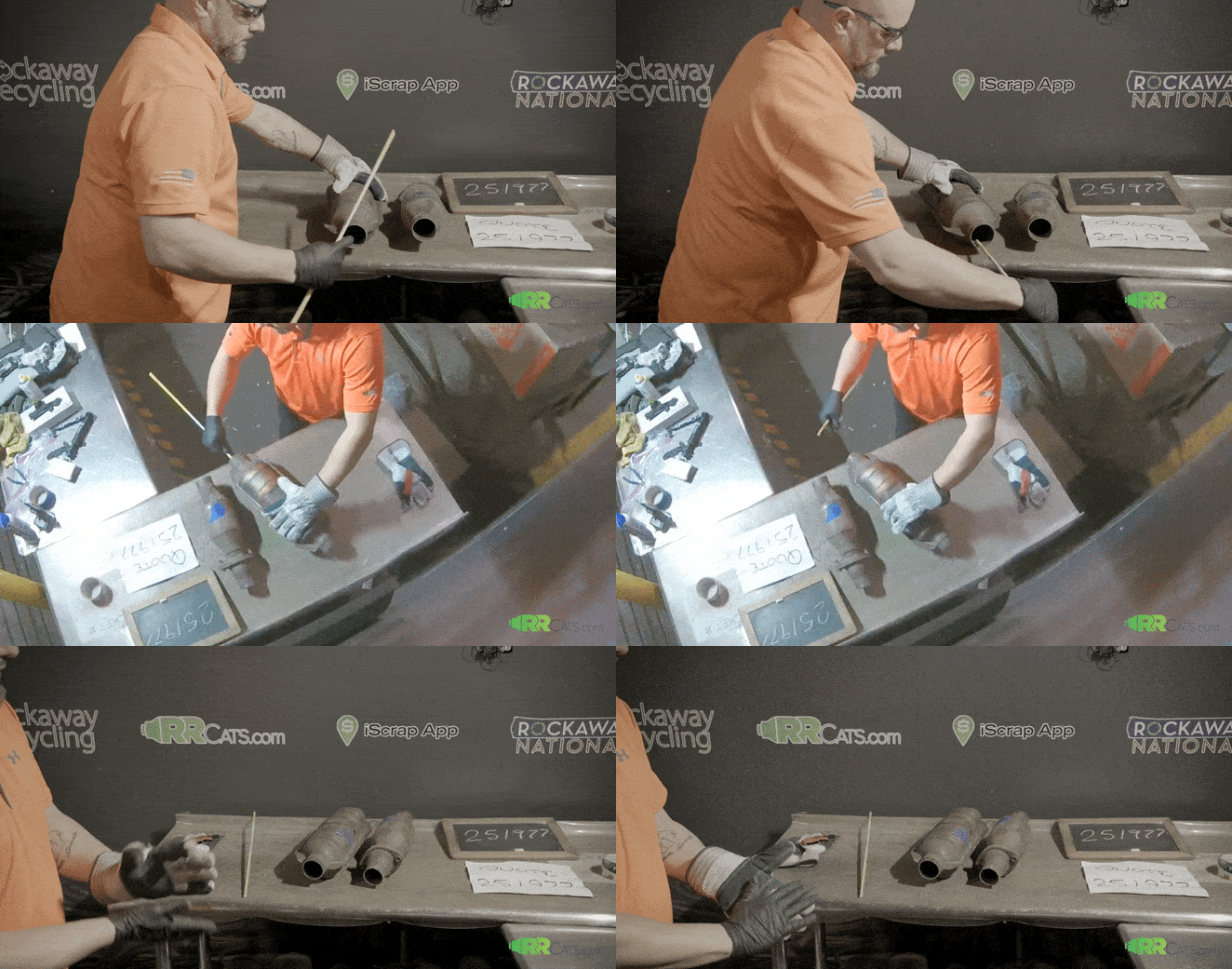
🎥 Watch the video below for a visual breakdown:
📦 Looking to sell catalytic converters?
RRCats offers expert identification, competitive pricing, and nationwide buying options.

Request Your Price Quote
FREE SHIPPING ON ALL OEM UNITS
Get Quote by Text
TEXT* US →
*By Texting, you agree to our Terms & Conditions including PayPal Fees